











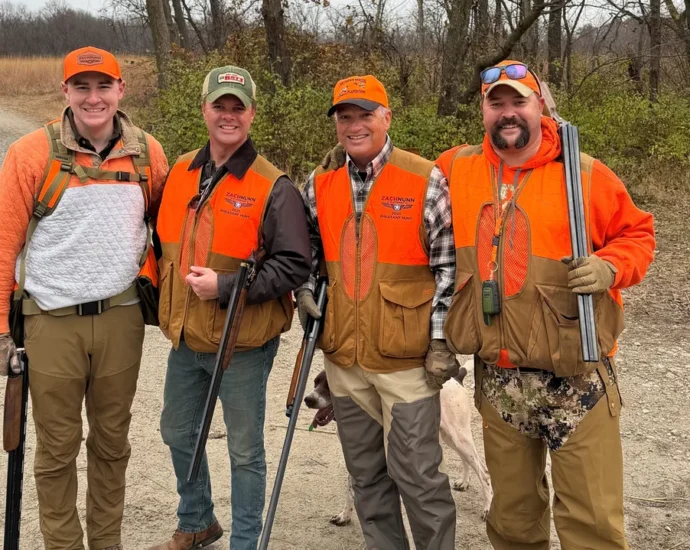
CAUSE FOR CONCERN: Rep. Zach Nunn, R-Iowa (second from left), is one of the sponsors of H.R. 5017, a provision of the current farm bill draft called the Greyhound Protection Act. As conservationists and hunters share concerns about vague language in the bill that might inadvertently impact hunting dogs, Nunn and other lawmakers are setting the record straight. “Anyone who hunts knows the bond between a hunter and their dog. That’s a relationship built on trust and respect, and it’s the furthest thing from what this bill targets,” Nunn said in an April 2 statement he provided to Farm Progress. “As we move the farm bill forward, I’m working with House leadership and the Agriculture Committee to make sure the final language makes that distinction crystal clear.” Courtesy of Rep. Zach Nunn
At a Glance
- The Greyhound Protection Act outlaws greyhound racing, but vague language leaves hunters and conservationists concerned.
- One provision would outlaw live bait and birds from being used in field trials and the training of hunting dogs.
- Lawmakers involved in the bill are working with conservation groups to correct language so hunting dogs are not impacted.
Did House lawmakers really sneak a hunting ban into their farm bill proposal? The answer varies depending on who you ask. Some accuse animal rights activists of a provision they say threatens their way of life, and some say it’s an oversight due to vague language.
The stated purpose of H.R. 5017, known as the Greyhound Protection Act, is to end greyhound racing in the U.S. Opponents say the bill’s vague language could bring undue consequences to hunting dogs, setting a precedent for future anti-hunting laws.
“Upland hunters have raised valid concerns about the vague language written in the bill that would have impacts on the training of bird dogs and hunting dogs,” said Jared Wiklund, spokesperson for Pheasants Forever, which advocates for farmers, ranchers and sportsmen.
Pheasants Forever is working with legislators on both sides of the aisle to ensure that clarifying language will uphold America’s hunting heritage.
Related:Ranchers react to Trump’s plan to import beef
According to the Sportsmen’s Alliance website, “anti-hunting activist groups have hijacked the farm bill by inserting language purporting to end greyhound racing, but which actually threatens to ban the use of sight hounds, scent hounds and bird dog training nationwide.”
The group did not respond to requests for comment.
What’s in the Greyhound Protection Act?
In the 1980s, there were more than 50 greyhound racing tracks in the U.S. across 19 states. By 1991, those tracks were pulling in an estimated $3.5 billion annually in wagers. Fourteen years later, in 2014, that number had plunged to only $500 million.
Much of that decline can be attributed to concerns over animal welfare. Racing dogs are prone to injuries, including broken bones, seizures, head trauma and paralysis. Most dogs only race for five years or fewer. Greyhound racing is now banned in 44 states, and only two U.S. tracks remain open, both in West Virginia.
Rep. Salud Carbajal, D-Calif., wants to make sure the sport doesn’t make a comeback. In 2023, he introduced a bill to ban greyhound racing. That bill did not make it out of committee before the congressional session ended.
Last August, Carbajal reintroduced the bipartisan Greyhound Protection Act. Co-sponsors included Randy Fine, R-Fla.; Don Davis, D-N.C.; and Zach Nunn, R-Iowa.
Carbajal, Davis and Nunn also serve on the House Agriculture Committee.
“Greyhound racing is cruel, inhumane and unpopular with the American public, which is why nearly every state has already voted to outlaw it,” Carbajal said when announcing the bill last summer. “As a member of the Animal Protection Caucus, I’m proud to stand with colleagues from both sides of the aisle to reintroduce bipartisan legislation that will finally put an end to this brutal practice and promote the universal welfare of our greyhounds.”
Related:Year-round E15 could strengthen corn industry
Those sentiments were echoed by Nunn, who called greyhound racing a “cruel and inhumane” practice that has no place in the country.
“Iowa shut down its last greyhound track because our communities recognized the cruelty behind this industry,” he said in a press release issued Aug. 26. “This bill follows Iowa’s lead, ensuring man’s best friend is treated with the care and respect every dog deserves.”
What would change?
If passed, the legislation would amend the federal Animal Welfare Act to prohibit commercial greyhound racing, as well as simulcast wagering on races in other countries. It would be illegal to “conduct open-field coursing or life-lure training with the use of any bait that is not an inanimate object.”
The law also bans selling, buying, possessing, training, transporting, delivering or receiving any greyhounds for racing purposes.
Those found in violation of the law would be subject to fines and imprisonment for up to seven years. The Greyhound Protection Act provisions included in the farm bill draft require more greyhound-specific language that will not impact other hunting dog breeds.
Related:How latest Section 45Z rulings impact farmers
Wiklund said Pheasants Forever and Quail Forever share this concern. “We’re actively working with Congress and with our partners to ensure the vague language in this provision does not become law,” he said. “We’re confident there’s time to make that change, and Congress is aware that the language is confusing right now.”
Are hunting dogs being banned?
Hannah Hayes of Turtle Lake, N.D., is among those concerned with the bill’s language.
“I’ve been an avid hunter for my whole life,” she said. “Hunting and conservation are very important to me.”
Hayes is the owner of Prairie Fauna Kennels, where she breeds and trains cocker and springer spaniels, among other sporting breeds.
“I train hunting dogs for people who want a well-mannered house dog they can shoot some birds over,” Hayes said.
She added that the best way to prove the instincts and abilities of these dogs is by getting them out into the field and hunting, as well as participating in field trials.
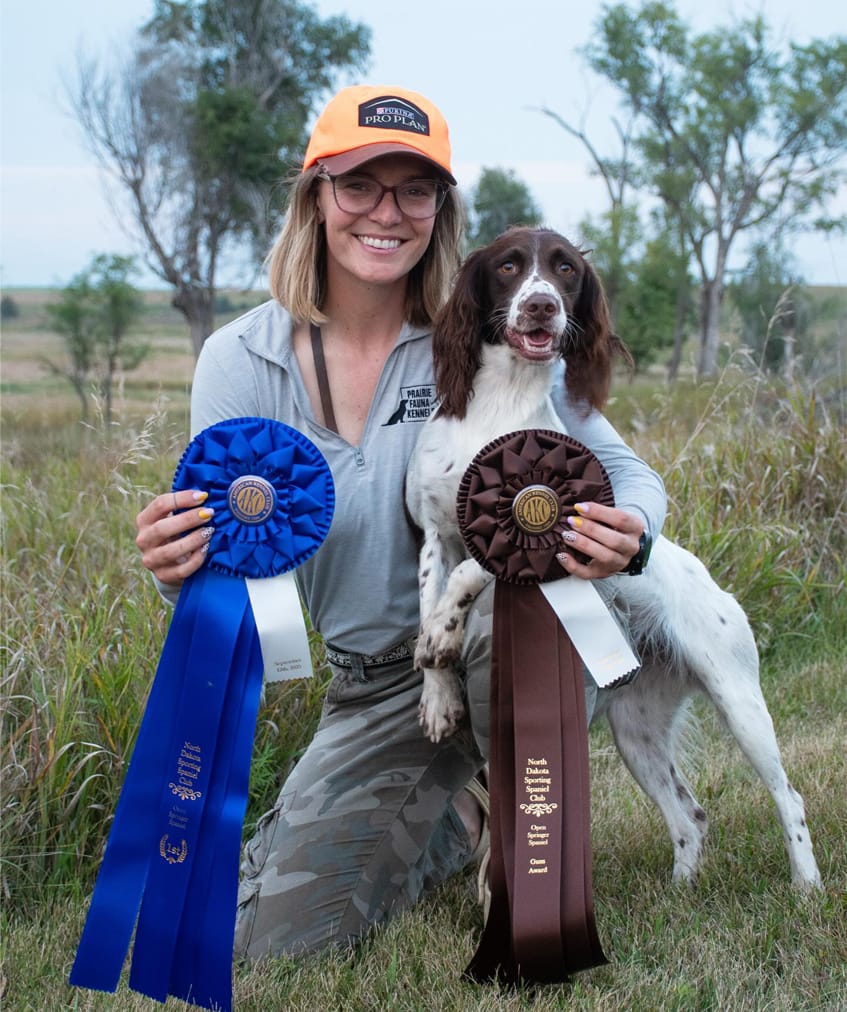
SEEKING ANSWERS: Hannah Hayes, owner of Prairie Fauna Kennels, trains hunting dogs. She shared her concerns about how this provision might impact her ability to continue her work. “There’s one clause that says it will ban the use of live lures, such as birds, in any training, and there’s no mention of the greyhound breed specifically,” Hayes said. “How I train dogs is with real hunting scenarios, such as pen-raised game like pigeons or quail, and I’m permitted to use pen-raised pheasants, which all would be considered life lures. This would impact my job, but also the preservation of the breed I’m very passionate about.” (Courtesy of Hannah Hayes, Prairie Fauna Kennels)
“On the surface level, it looks like this bill is just going to impact greyhounds, but it’s setting a precedent,” Hayes explained. “I don’t think anyone’s rights to prove their dogs should be infringed upon, because that is how we preserve various breeds of dogs.”
Hayes worries that she and other trainers’ ability to train hunting dogs would be directly affected. This, she said, also would impact hunters.
Hayes noted that many in agriculture enjoy getting outdoors and hunting upland game or waterfowl alongside their dogs.
“There’s one clause that says it will ban the use of live lures such as birds in any training, and there’s no mention of the greyhound breed specifically,” she said. “How I train dogs is with real hunting scenarios, such as pen-raised game like pigeons or quail, and I’m permitted to use pen-raised pheasants, which all would be considered life lures. This would impact my job, but also the preservation of the breed I’m very passionate about.”
Hayes worries that the proposed law not only changes how she and others handle and train their dogs. It also potentially opens the door for interest groups to further restrict their livelihoods in the future.
Is it really just an oversight?
In response to growing concerns from hunters, Carbajal told Farm Progress on March 31 that the intent of his bill is solely to end greyhound racing, not restrict hunting.
“Greyhound racing is cruel, inhumane and unpopular with the American public, which is why nearly every state has already voted to outlaw it,” Carbajal said. “As this bill moves through the legislative process, I’m committed to ensuring the final language maintains its original intent while respecting outdoor recreational activities.”
An official with Nunn’s office noted that the term “open-field coursing,” which is used in the bill, refers to organized, competitive coursing events historically tied to the greyhound racing industry, not hunting dogs. The official confirmed that Nunn is working with other Agriculture Committee members to ensure hunting protections are explicit in the final bill.
“Anyone who hunts knows the bond between a hunter and their dog. That’s a relationship built on trust and respect, and it’s the furthest thing from what this bill targets,” Nunn said in an April 2 statement he provided to Farm Progress. “As we move the farm bill forward, I’m working with House leadership and the Agriculture Committee to make sure the final language makes that distinction crystal clear.”
Davis echoed those sentiments in an April 1 message to Farm Progress.
“Hunting is a vital part of eastern North Carolina’s rich legacy, and there was no intention for this legislation to affect this important aspect of our heritage,” he said. “I am currently listening to the concerns, reviewing the language, and am prepared to support any clarifying language if necessary.”
Need for a fair farm bill
Conservation is vital to farmers and sportsmen alike. With the farm bill currently lapsed, many groups and individuals are sharing the urgency of passing one as soon as possible.
Pheasants Forever, which works closely with the agriculture industry, also is pushing for a farm bill to pass.
“We work extremely hard on ensuring that the farm bill is good for farmers, good for wildlife, good for rural economies and good for hunters,” Wiklund said. “The farm bill is the single largest source of conservation funding for private lands, and we work hand in hand with America’s farmers, ranchers and landowners.
“Whether you’re a hunter, a farmer or a member of our organization, I think everyone agrees that getting a farm bill done here is critically important; however, we’re going to make sure it’s got the proper language in there reflecting all stakeholders,” Wiklund added. “America’s farmers and ranchers deserve a good farm bill for their bottom line, while taxpayers also deserve legislation that’s good for soil, water and wildlife resources. We exist to ensure all of those priorities are met.”
What happens next?
In March, seven Democrats joined all Republican House members part of the Agriculture Committee to advance a GOP-authored farm bill proposal. The full House is expected to take up the bill later this spring, although the exact timing remains unclear.
Senate Agriculture Committee Chair John Boozman, R-Ark., is expected to release his own farm bill draft in the coming months. So far, it’s unclear if the Senate bill will include language banning greyhound racing.
Concerned individuals and organizations are encouraging hunters and conservationists to contact their state senators and representatives to ensure their voices are heard and their hunting dogs protected.
If the Senate and House end up passing different farm bills, the two congressional chambers will need to reconcile their differences before voting to advance a final bill for President Donald Trump’s approval.
