










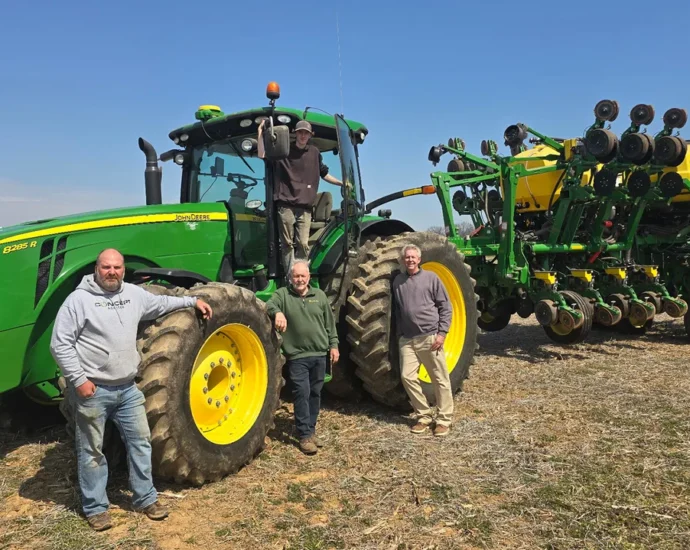
Things are soggy on Chris Weaver’s farm in Finksburg, Md., and jobs on the farm are backing up.
“We’ve had too much moisture, and it’s building up pressure. We’ve got cattle manure, mushroom soil, fertilizer and spraying to do. But then the weather drops from 80 to 52, and I think, ‘OK, I don’t feel the pressure today,’” he said with a laugh.
Related:Planting done, harvest ahead: Farmers navigate critical time
Weaver runs a 1,000-acre farm, along with a seed-sales business and a small feedlot.
This year, he’s going heavy on beans — 60% beans to corn — but it’s not because of price.
“One year we’re usually heavier on beans versus corn, and it’s going to be more crop rotation,” Weaver said. “We’ve done a couple of years around the farm and the feedlot with corn-on-corn. We just have to rotate those acres.”
His goal is to start planting around April 15. If there’s a cold snap, he’ll plant corn first, and then plant corn and beans together.
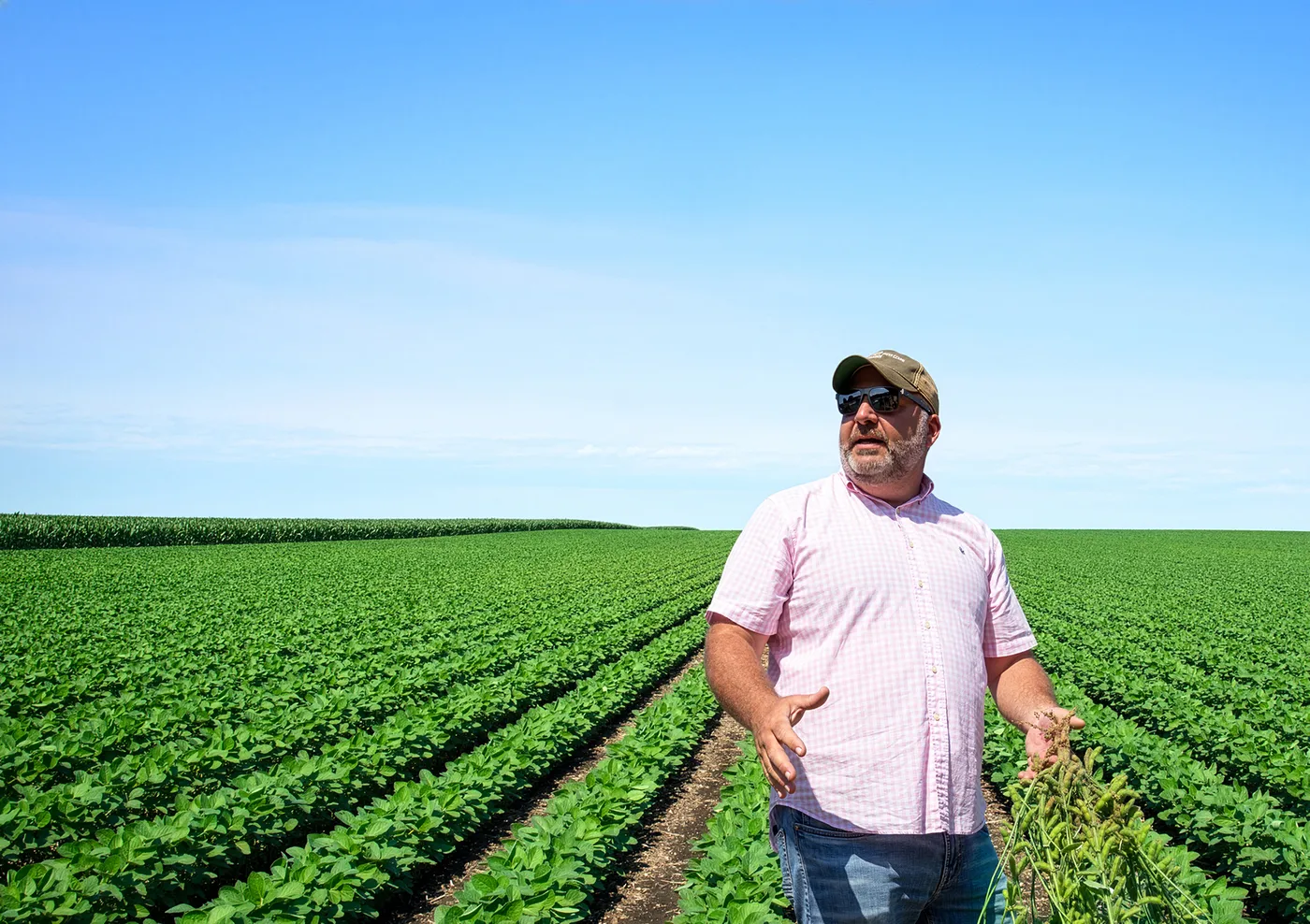
SOYBEAN KING: Maryland farmer Chris Weaver set a world record last year with 154.98 bushels per acre for nonirrigated, no-till soybeans. His passion for farming is fueled by his love of challenges. (Photo by Zachary Cavosi)
What’s new?
Weaver plants 100 acres of test plots every year. He’s seen a lot of success in his test plots. Last year, he set a world record of 154.98 bushels for nonirrigated, no-till beans.
This season, he’s planting bigger plots focused on fewer products.
Among the things he’s testing: a calcium silicate product, and a new probe that does in-ground monitoring of nutrient-use efficiency, nitrates and water.
He also has 45 acres in the Maryland Healthy Soils Program, which offers grants — typically up to $50,000 for three years — for farmers to adopt practices such as reduced tillage, cover cropping and silvopasture.
Weaver is testing biological products and using a roller crimper for the first time.
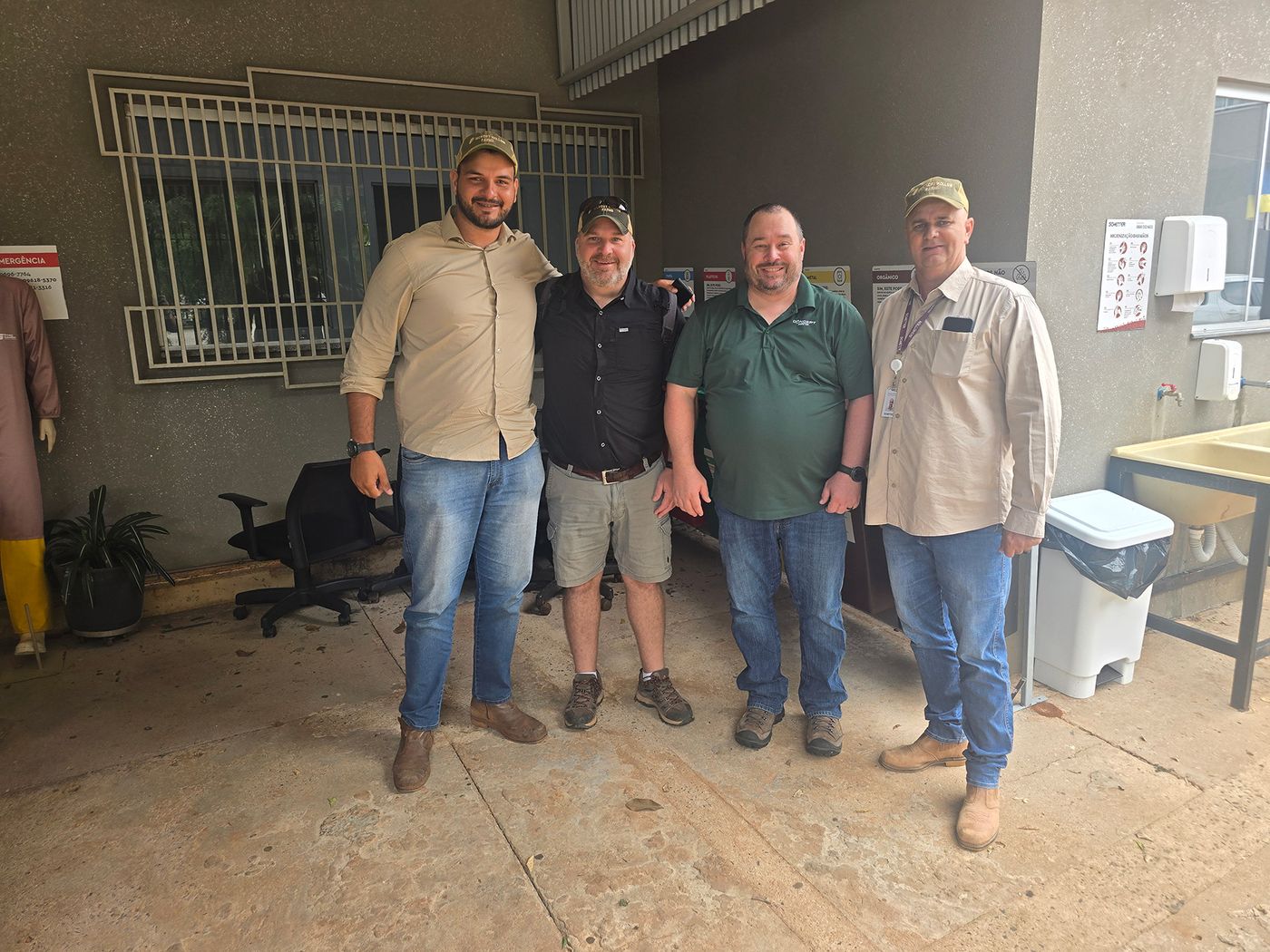
VISITING BRAZIL: Another goal Weaver has is to learn more and share his knowledge with other farmers. In March, just before Commodity Classic, he went to Brazil to visit a farmer who had visited his farm two years ago. (Photo by Chris Weaver)
Managing the downturn
Weaver said his biggest concern this season is rising input costs — especially fertilizer — and timing the grain market for maximum profit.
“The grain market is trending well right now, and you can get good contracts for the fall,” he said. “But when will it bottom out? And when will fuel prices drop? Will that take the grain market down? Fertilizer prices are high right now, and we haven’t pre-bought all our inputs for this year.
Related:Why farmers are switching to manure aeration
“I’m still trying to figure out how the fertilizer market can increase when local fertilizer bins are full. How can prices skyrocket when there’s already so much product?”
Weaver said he is managing phosphorus better by applying more humic substances, carbon and sugars that he believes will reduce his overall phosphorus use.
“Testing showed we could cut fertilizer by 50% for phosphorus,” he said. “We’ve already shown we can drop nitrogen to 0.5 units per bushel on corn. Now we’re pushing to see what else we can achieve with phosphorus.”
He’s also trying new fungicide and nematode treatments.
“One of the things we’ve learned is that nematodes are a silent yield robber for us,” Weaver said. “We weren’t even monitoring nematodes until last fall. After testing, we found that our threshold levels were much higher than we imagined. So, this year, we’re doing a nematode spray to reduce their impact in the soil. Seed treatments are good, but they don’t kill all the nematodes.”
Weaver runs a feedlot on the farm with his father, Richard. They buy cattle at 300 to 500 pounds and finish them out for local butcher shops and farm-to-fork sales. They finish between 120 and 150 cattle a year.
Related:Young farmers share their process for testing new ideas
High beef prices have made this more expensive to do. The price of a load of cattle has doubled in a year. Weaver said they are managing as best they can.
“Dad has developed a great recipe using different corn types, barley and alfalfa,” he said. “We grind everything ourselves, which helps us maintain an average daily gain of 3.1 pounds a day.”
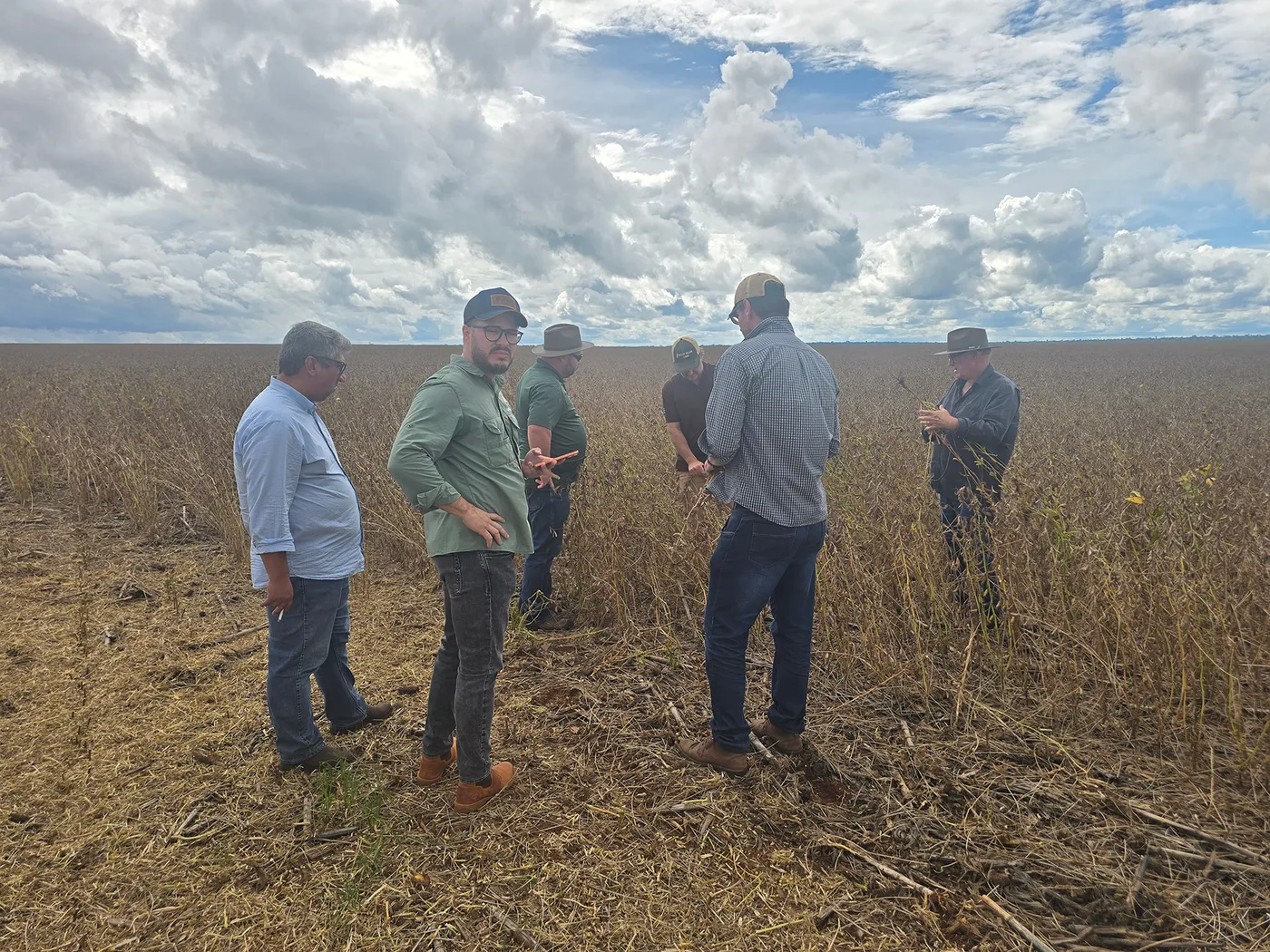
CHECKING OUT SOYBEANS: The farm Weaver visited is huge — 150,000 acres in and around Mato Grosso — and one of the largest cotton producers in the country. (Photo by Chris Weaver)
Learning in Brazil
Another goal Weaver has is to learn more and share his knowledge with other farmers.
In March, just before Commodity Classic, he went to Brazil to visit a farmer who had visited his farm two years ago. The farm is huge — 150,000 acres in and around Mato Grosso — and one of the largest cotton producers in the country. The two have become friends, and they exchange ideas on how to farm.
Weaver credits his farming success to the fact that he’s exchanged ideas with farmers here and outside the country. In Brazil, for example, his goal was to learn more about soil biology.
“We often think we’re the best, but Brazilian farmers have become better at biology than we have, in my opinion,” he said. “They grow three crops a year, which kills their microbes, but they’ve figured out ways to improve their soil biology. I wanted to learn more about how they manage crop rotations, herbicide injury and other challenges.”
Weaver said other farmers should travel more, too, and learn from others.
“As farmers, we need to visit other countries, learn from their experiences and educate our politicians about agricultural chemicals,” he said. “Many politicians jump to conclusions without understanding the full picture. I wanted to see what he was doing differently and learn from the Brazilian soybean champions. But it was more about educating myself than anything else.”
