











Fields are empty, and the combine is parked. You’ve crossed the finish line. It’s the end of another hectic harvest season. But your work doesn’t stop here.
If you’ve got grain in the bin, then this is just the start for you. The end of harvest signals the start of your duties to safeguard that crop in the bin. And although these proactive measures are simple, they are paramount in protecting the quality of that grain.
“Moisture is key,” shared Kent Chism, a farmer from Galveston, Ind. “Too much moisture is not good. That’s just asking for trouble.”
Grain storage guide
To keep moisture in check and keep the grain from clumping or spoiling, Chism routinely monitors grain once it’s in the bin. Here, he combined his advice with insights from David Ellis, district sales manager for GSI, for a “how-to” guide to long-term grain storage:
Sharpen your monitoring routine. Make monitoring part of your weekly or biweekly routine, Chism advised. How often he monitors depends on weather conditions.
Related:Put safety in focus this harvest season
“It doesn’t take long to just climb up and take a quick peek around and smell,” Chism said. “Sometimes, things might smell off. You just need to get up there and be aware of what’s going on.”
Look below the surface. Although you might catch problems like crusted grain by glancing into the bin, Ellis said that you should be pulling samples from below the surface to get a better gauge of moisture.
“It might look good, but you don’t know what’s going on underneath,” he explained. “There could be some crusting or hot spots, and that’s dangerous. You’ve got to take several samples throughout.”
Ensure you have a probe to pull samples from 10 to 12 feet below the surface. Pull samples from multiple sections to get a representative sample.
Watch the weather. When temperatures drop, Chism said that is the ideal time to bring down the temperature inside the bins, too.
“Whenever we get a good 20-degree day or less, we like to run the fans and take the temperature down on our stored corn,” he added. His philosophy is to seize that cold day to “freeze” everything.
Fine-tune fan operation. There isn’t a one-size-fits-all timeline for running fans on your stored grain.
“It’s a loaded question,” Ellis said. “Some say to run them on certain days, and others will run their fans on the opposite days.”
Chism said he turns on the fans once the bin is one-third full during harvest. He’ll keep them running until the bin is full. Then, he’ll turn the fans back on to achieve that “freeze” during a cold stretch, and he’ll pop in occasionally throughout the rest of the season to run some more air through the bins.
Related:Tame harvest chaos with meal prep, realistic expectations
The goal is to keep temperatures below 50 degrees F to prevent insect issues and spoilage.
Move grain often. Once the bin is full, it’s time to core it. Chism shared that this initial coring should be all it takes to set your stored grain up for success. But moving grain often — for example, removing grain once a month — can help avoid any problems.
“You don’t really need to core it again, but just take some out to make sure everything stays in good condition,” he added.
Adopt automation. Cut the confusion out of grain storage by incorporating a grain monitoring system. Ellis said that the GSI GrainVue system monitors grain around the clock and includes automated fan controls to adhere to your preferred settings.
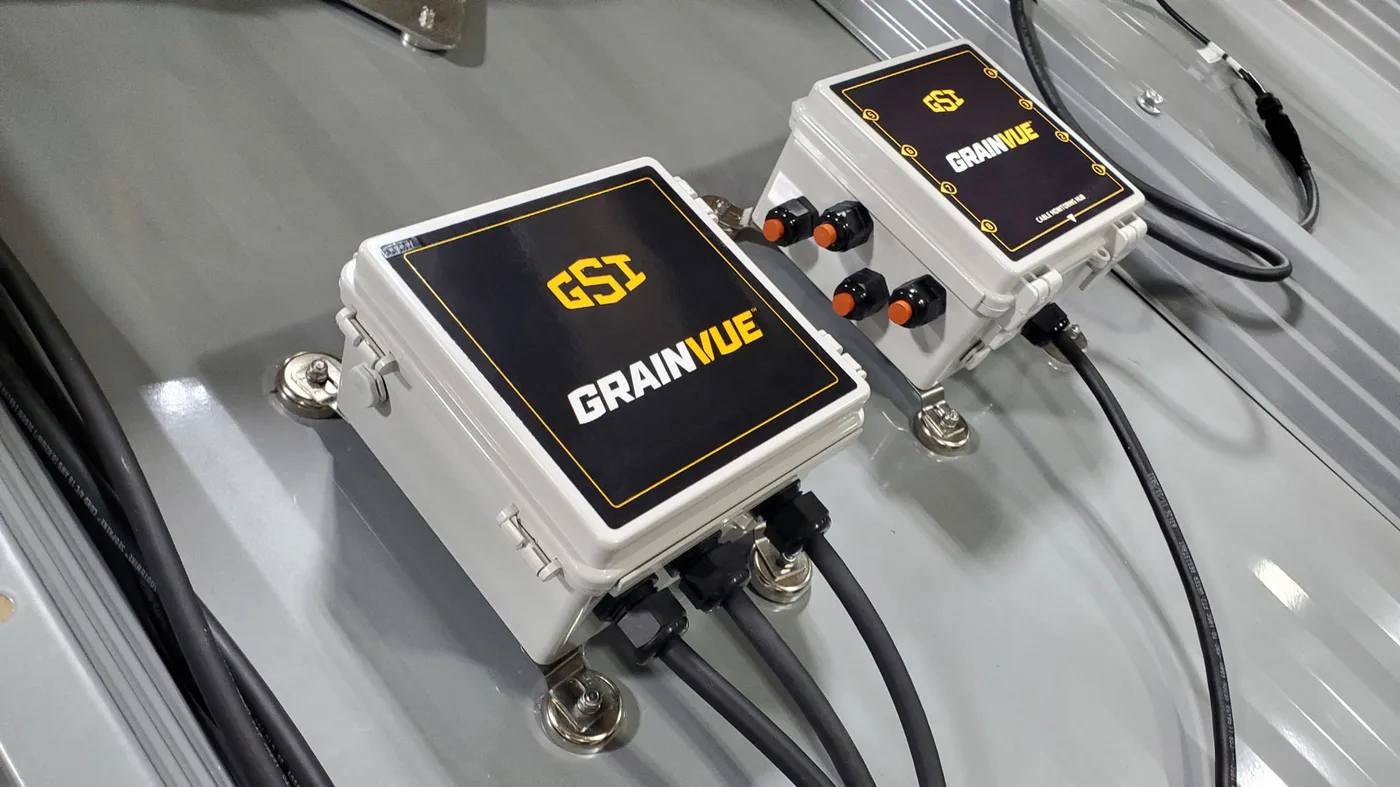
Consider installing an automated grain monitoring system, like the GSI GrainVue system. It can take the guesswork out of moisture and temperature monitoring and management decisions. (Photo courtesy of GSI)
“Nowadays with these systems like GrainVue, it really takes away a lot of the guesswork,” Ellis said. “So if you core your bin and the grain is good and clean and you’ve spread the fines out, you just need to monitor it on your phone. That’s what people are moving toward.”
